Quick Answer
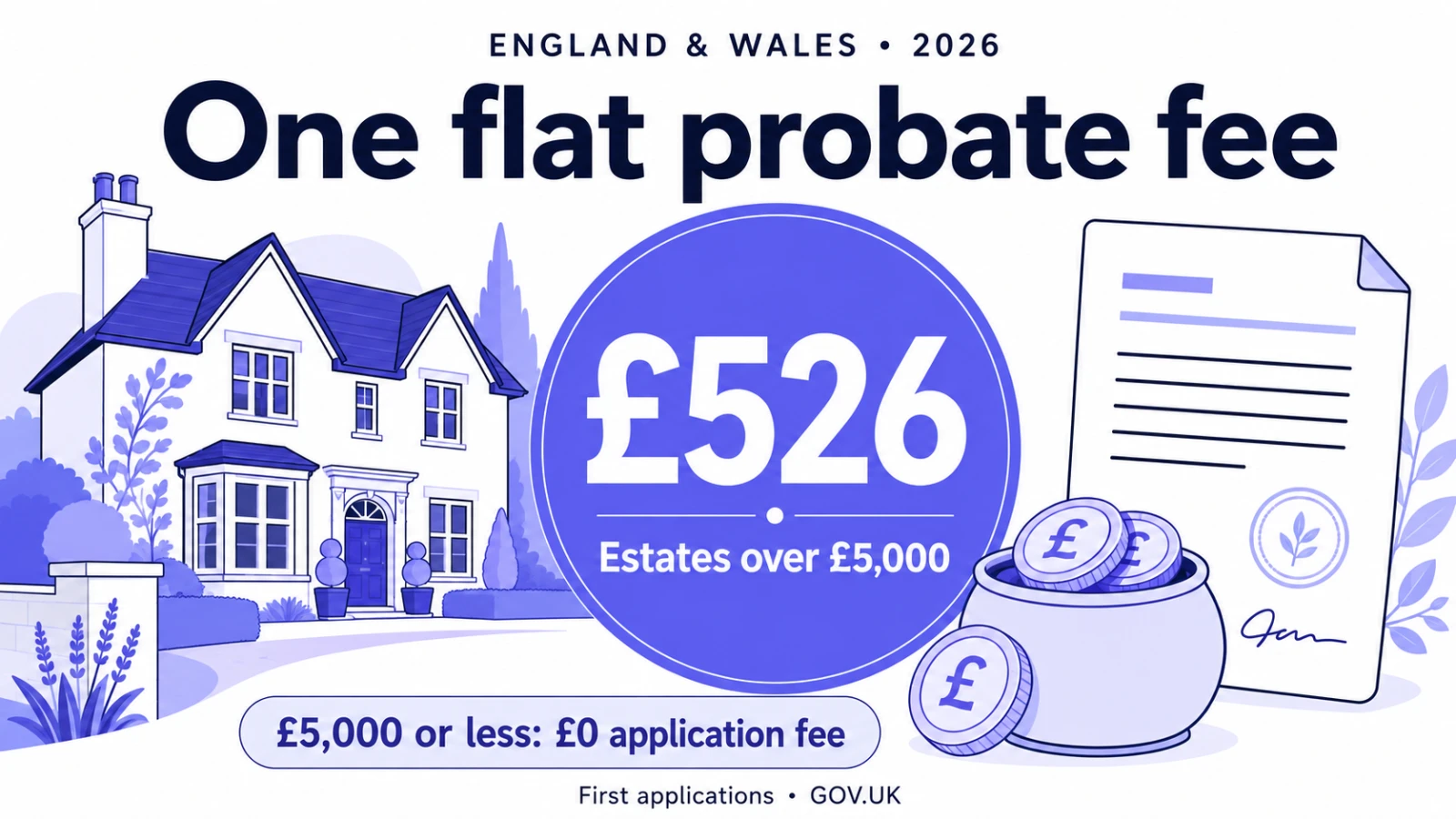
Applying for probate in England and Wales costs £526 when the estate is over £5,000 and nothing at or below it — a flat fee, not a percentage. Extra sealed copies are £2 each ordered with the application and £16 each afterwards, so four copies make a typical DIY total £534.
Probate Fees in England and Wales: What HMCTS Charges in 2026
Four charges make up the court side of probate, and only the first one depends on the estate at all. Everything else on the bill is a copy, a second application, or a quote from somebody you chose to hire.
| Charge | Amount | When you pay it |
|---|---|---|
| Probate application, estate over £5,000 | £526 | With the application |
| Probate application, estate £5,000 or less | No fee | — |
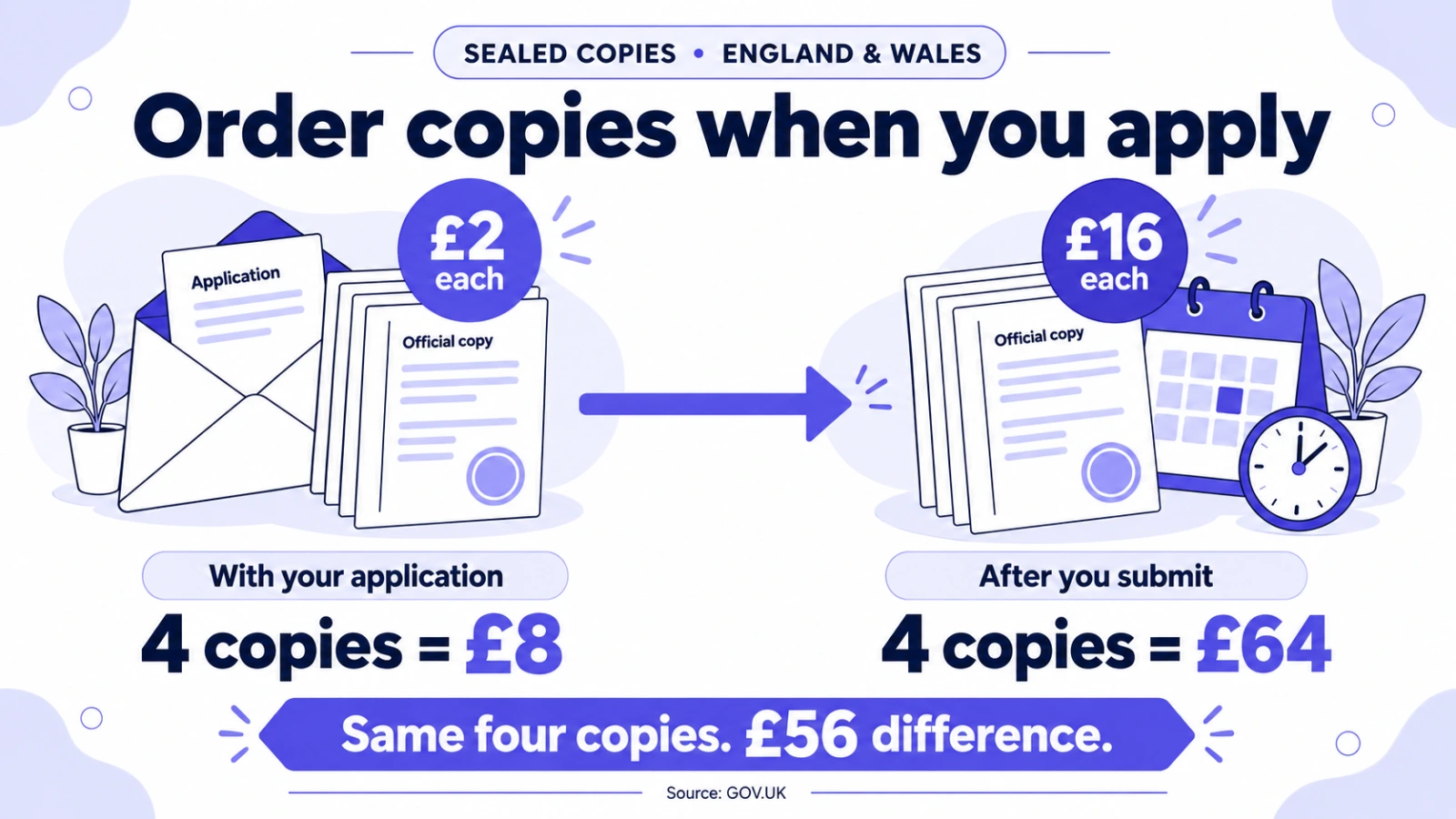
| Extra sealed copy of the grant, ordered with the application | £2 each | With the application |
| Extra sealed copy ordered after you have submitted | £16 each | Whenever you ask |
| Second application where probate has already been granted | £22 | Payable even if the estate is £5,000 or less |
Published fees for England and Wales, read from GOV.UK, Applying for probate: Fees. Older pages still quote £155 or £300 — both are superseded figures.
The probate fees calculator adds those together and nothing else:
total = application fee + (copies with application × £2) + (copies later × £16) + your own professional quoteThe £22 second application is the one almost nobody covers. It applies when the grant has already been issued and another executor comes forward — typically somebody who had power reserved to them on the first application and later decides to act. It is charged whatever the estate is worth, so it is the one probate fee a £3,000 estate can still face.
The Probate Fee Is Flat, Not a Percentage of the Estate
This is the single biggest misunderstanding about probate costs, and it is worth being blunt about: the court fee is not scaled, banded or tiered. Above £5,000 it is £526 and it stops there.
| Value of the estate | Application fee | Fee as a share of the estate |
|---|---|---|
| £4,000 | £0 | — |
| £5,000 | £0 | — |
| £6,000 | £526 | 8.77% |
| £300,000 | £526 | 0.18% |
| £6,000,000 | £526 | effectively 0% |
The share column is the calculator’s “cost of the estate” read-out, with four sealed copies included in the £300,000 row.
Read the £6,000 row and the £6,000,000 row together. Both estates pay £526. On the small one that is 8.77% of everything the person left; on the large one it rounds to nothing. The fee is regressive by design, which is exactly why an estate just over the threshold deserves a moment’s thought and a £900,000 estate does not need a fee calculator at all — it needs a plan for the professional costs.
Sealed Copies Cost £2 With the Application and £16 After It
A grant of probate is a single sealed document, and every organisation holding the deceased’s money wants to see an official copy of it. Banks, building societies, pension providers, share registrars, insurers and HM Land Registry will each ask, and most of them will not act on a photocopy. Executors who send copies out one at a time, waiting for each to come back, lose weeks.
Ordered with the application, each extra copy costs £2. Ordered after you have submitted, the same copy costs £16 — eight times as much. Four copies bought up front cost £8; the same four bought later cost £64.
There is no cap and no discount for volume — the charge is simply the number of copies times the price that applied when you asked. Ordering a couple more than you think you need is cheap insurance at £2 and an expensive correction at £16.
Solicitor Fees for Probate: This Calculator Uses Your Quote, Not an Average
Search for the cost of probate and most results will offer you an average solicitor fee, usually as a percentage of the estate. This calculator deliberately does not. There is no published, checkable average for probate work in England and Wales, firms charge on completely different models, and a made-up number on a page about somebody’s inheritance is worse than no number at all.
What the tool does instead is take the figure you were quoted and do the arithmetic on it. Three modes cover how quotes actually arrive:
| Mode | What you enter | On a £300,000 estate with 4 copies |
|---|---|---|
| DIY — none | Nothing. You are applying yourself | £534 |
| Fixed quote | The pounds figure on the quote | £1,500 quote → £2,034 |
| % of estate | The percentage the firm quoted | 2.5% → £7,500 → £8,034 |
The £1,500 and 2.5% are illustrations of the two charging models, not a recommendation or a market rate. Use your own quote.
Two things fall out of that table. A fixed quote does not move when the estate is revalued, and a percentage quote does — on a £600,000 estate the same 2.5% is £15,000. And the percentage model puts the professional fee an order of magnitude above the court fee: at 2.5% the £526 that dominates the search results is 6.5% of what you actually pay.
Ask every firm for the quote in writing, ask whether VAT and disbursements are included, and ask what happens if the estate turns out to be more complicated than it looked. If you are handed a percentage and want to know what that is in pounds — or you have a pounds figure and want to know what percentage of the estate it represents — the reverse percentage calculator works it in both directions.
Help With Fees: When the £526 Is Remitted, and What It Does Not Cover
The court fee can be reduced or removed under the Help with Fees scheme if you are on a low income or receive certain benefits. You apply online or on form EX160 before applying for probate. Three details decide whether it is worth counting on:
- It is means tested on savings and income. A full remission is one outcome; a partial award is another, and that still leaves part of the £526 to pay. The calculator’s remission toggle shows the full-remission case and says so.
- It does not cover the copies. GOV.UK is explicit: you cannot get help with the fee for extra copies of the probate document. Switch remission on with four copies selected and the total falls to £8, not zero.
- Applying online means paying first. If you apply for probate online you pay the full fee at the time, and the refund follows if the Help with Fees application succeeds.
How to Use the Probate Fees Calculator
- Enter the value of the estate.
Everything the person owned — property, savings, investments and possessions. The exact figure only changes the answer if the estate is near £5,000, because the fee is flat above it.
- Set the number of sealed copies you want with the application.
One for each bank, pension provider, registrar or insurer that will ask to see the grant. These are the £2 ones.
- Add any copies you expect to order later.
Leave this at zero if you are ordering everything up front. Put a number in it to see what the £16 price does to the total.
- Choose whether you are paying the fee or applying for a remission.
“Full remission” zeroes the court fee and leaves the copies charged, which is how the scheme actually works.
- Pick how you are handling the professional side.
DIY adds nothing. Fixed quote takes the pounds figure you were given. “% of estate” takes the percentage and applies it to the estate value at the top. The tool never supplies a rate of its own.
Worked Example: What Probate Costs on a £300,000 Estate
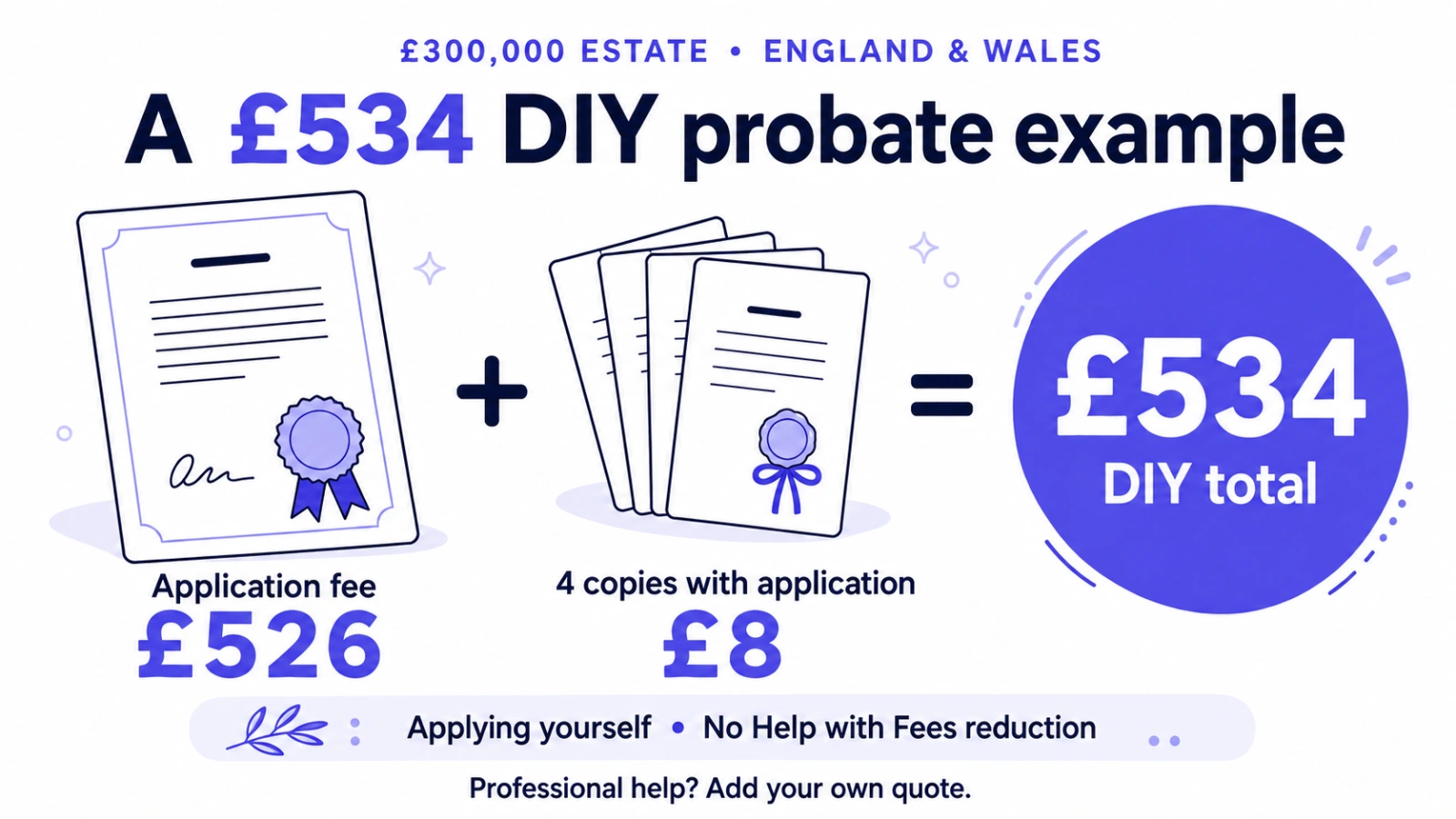
A house-and-savings estate valued at £300,000, four sealed copies ordered with the application, no remission, applying without a solicitor. This is the state the calculator opens in, so every line below is on screen as you read it.
| Line | Working | Amount |
|---|---|---|
| Probate application fee | Estate is over £5,000, so the flat fee applies | £526 |
| Copies with application | 4 × £2 | £8 |
| Professional fees | DIY — nothing entered | £0 |
| Total to apply | £526 + £8 | £534 |
| Cost of the estate | £534 ÷ £300,000 | 0.18% |
Now change one thing. Order two of those copies after submitting rather than with the application, and the copies line splits into £8 plus £32: the total becomes £566 and the calculator tells you that ordering them up front would have saved £28. That is a 6% increase in the cost of the whole application, caused by nothing except the order in which you asked for two pieces of paper.
Add a £1,500 fixed quote to the original example and the total is £2,034, of which the court’s share is a quarter. Switch that to a 2.5% quote and it is £8,034. The professional decision is the expensive one; the fee is not.
When You Do Not Need Probate at All
The cheapest probate application is the one you do not have to make, and it is a real possibility rather than a loophole. GOV.UK says you may not need probate if the person who died only had savings, owned shares or money jointly with others, or owned land or property as joint tenants — jointly held assets pass to the surviving owner automatically.
Enter £4,000 in the calculator and it says so directly: no application fee is payable, and many small estates need no grant at all. The four copies still cost £8, because copies are only charged if you are actually getting a grant.
Being told you need probate is not the end of the arithmetic, either. Debts owed by the estate come out of it before anyone inherits, and an outstanding finance agreement is the one executors are most often surprised by — if there is a car on finance, the lender is a creditor of the estate and the settlement figure, not the monthly payment, is what matters. Our paying off car finance early calculator shows how an early settlement figure is built up.
England and Wales Only: Scotland and Northern Ireland Are Different
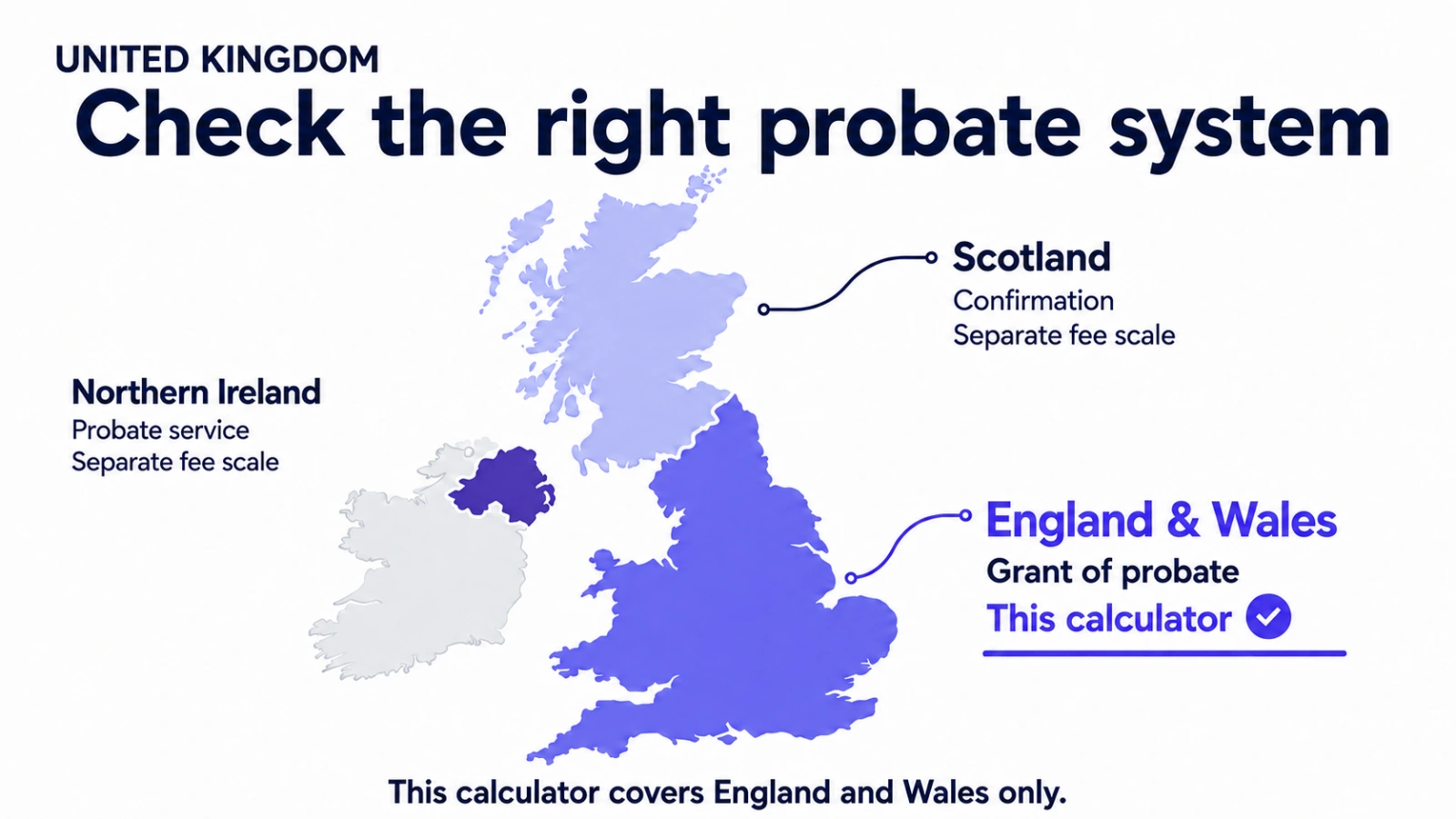
Every figure on this page is the HM Courts & Tribunals Service scale for England and Wales. Scotland does not grant probate at all — the equivalent process is called confirmation and runs through the sheriff court on its own fee scale. Northern Ireland has its own probate service and its own charges. If the person died domiciled in Scotland or Northern Ireland, this calculator is the wrong scale and the right one is that jurisdiction’s own published fee list.
Four of the top fifteen results for probate cost queries are for entirely different countries. Check that whatever page you are reading names England and Wales before you trust its number.