
Quick Answer
This chocolate toxicity calculator for dogs estimates the theobromine dose your dog received: dose (mg/kg) = amount of chocolate (g) × theobromine per gram ÷ body weight (kg). Per the Merck Veterinary Manual, mild signs start near 20 mg/kg, cardiac effects at 40–50 mg/kg, and seizures at 60 mg/kg or more — so always call your vet or a poison-control hotline for any real exposure.
How the Theobromine Dose Is Calculated
Chocolate is dangerous to dogs because of theobromine, a stimulant they metabolise far more slowly than humans. The calculator multiplies the amount eaten by the theobromine concentration of that chocolate type, then divides by your dog’s body weight to get a dose in milligrams per kilogram (mg/kg) — the number vets use to judge severity.
Dose (mg/kg) = amount eaten (g) × theobromine per gram ÷ body weight (kg)
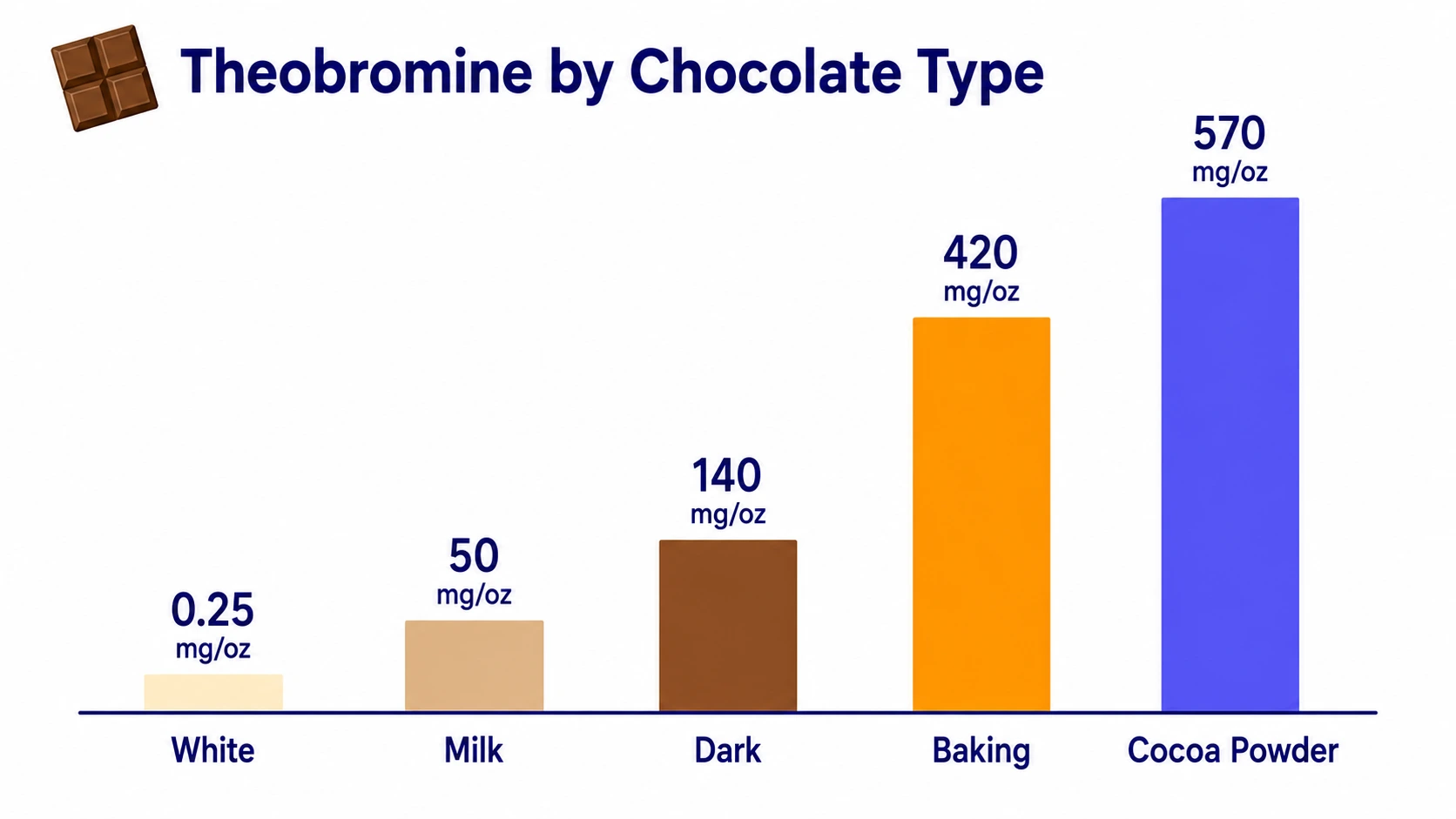
Darker chocolate carries far more theobromine per gram, which is why a few squares of baker’s chocolate are more dangerous than a whole milk-chocolate bar. The values below drive the calculator.
| Chocolate type | Theobromine (per oz) | Theobromine (per g) |
|---|---|---|
| White chocolate | ~0.25 mg | ~0.009 mg |
| Milk chocolate | ~50 mg | ~1.75 mg |
| Dark / semi-sweet | ~140–155 mg | ~4.9–5.5 mg |
| Baking (unsweetened) | ~420 mg | ~14.9 mg |
| Cocoa powder | ~570 mg | ~20 mg |
Theobromine Risk Levels for Dogs (mg/kg)
The calculator’s colour-coded bands follow the toxic-dose thresholds published by the Merck Veterinary Manual. The oral LD50 is reported at 100–200 mg/kg, but serious signs and death can occur well below that, and sensitivity varies between dogs.
| Dose (mg/kg) | Risk band | What to expect |
|---|---|---|
| Below 20 | Safe | Usually no signs — monitor at home |
| 20 – 40 | Mild | Vomiting, diarrhea, restlessness, thirst |
| 40 – 60 | Moderate | Cardiac effects: fast heart rate, tremors |
| 60 – 100 | Severe | Seizures, arrhythmia — emergency vet now |
| Over 100 | Lethal range | Potentially fatal — immediate treatment |
How to Use the Chocolate Toxicity Calculator
- Enter your dog’s weight.
Switch between kg and lb. If you’re unsure, round down slightly — it keeps the safety margin on your side.
- Pick the chocolate type.
For dark or semi-sweet, a cocoa-percentage slider appears so you can match the wrapper (60%, 70%, 85%).
- Enter the amount eaten.
Use the original package weight, not the leftovers — dogs rarely leave any. Switch between grams and ounces.
- Read the dose and risk band.
You get the theobromine dose in mg/kg, a colour-coded risk level, a visual meter, and the recommended action — including vet hotline numbers for severe results.
Worked Examples: Is It a Vet Emergency?
Milk chocolate, large dog. A 25 kg Labrador eats a 40 g milk-chocolate bar (1.75 mg/g): 40 × 1.75 = 70 mg total ÷ 25 kg = 2.8 mg/kg — well under 20, so the result is Safe. Monitor at home and watch for vomiting.
Dark chocolate, medium dog. A 10 kg Beagle eats 100 g of 70% dark chocolate (≈7 mg/g): 100 × 7 = 700 mg ÷ 10 kg = 70 mg/kg — in the Severe band. Seizures and arrhythmia are likely, so this is an emergency-vet trip.
Baking chocolate, small dog. A 5 kg terrier eats one 30 g baker’s square (14.85 mg/g): 30 × 14.85 = 445 mg ÷ 5 kg = 89 mg/kg — Severe, approaching the lethal range. Call the Pet Poison Helpline on the way to the clinic.